
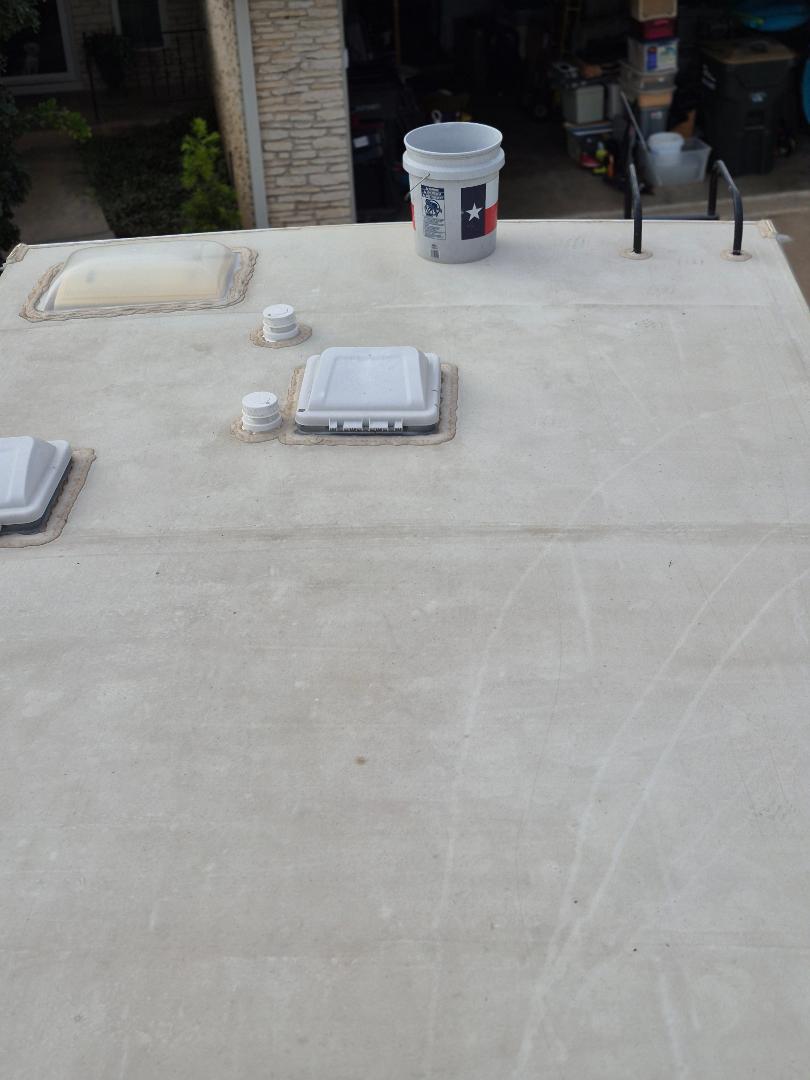
How and why to apply rubber roof conditioner
The roof seal or “rubber roof “ that a great deal of recreational vehicles come with, is actually made of a few different materials. EPDM or Ethylene Propylene Diene Monomer, was for a long time considered an industry standard and is still preferred in many colder regions with harsh winters. The positive for EPDM in cold regions is that it retains heat more efficiently; in part because it is black.
The alternative is TPO or Thermoplastic Polyolefin. It has grown more popular than EPDM because of its energy efficiency, particularly in warmer regions. TPO is white and reflects a great deal of heat energy away from the vehicle, making it easier to cool.
There are other pros and cons to either composite. The climate that you’ll use your RV in most should certainly factor into your choice of roofs, or choice of a preowned RV purchase.
CleanRv is based in Central Texas. Summers can be brutal here and it is rare to see an EPDM roof. The TPO roof is ninety-five percent of what we see here, and although it is designed to reflect heat, without proper maintenance the southern summer can prove too much for the roof and cause it to become brittle and cause seams to separate prematurely.
The lifespan of a TPO roof is 15 to 30 yrs. The average is 20 to 25. Without proper maintenance, the roof will experience problems early on. In harsh summer climates, roof inspections should happen twice annually. CleanRv, like the majority of RV manufactures, suggests cleaning and conditioning a rubber roof two to four times a year. The roof has to be monitored and maintained frequently in order for it to reach its potential longevity. If the RV is parked under trees, the frequency of maintenance increases.
What to use?
Avoid using bleach or other harsh chemicals to clean your rubber roof. We suggest either Dawn dishwashing liquid or other mild soaps to clean the roof. Remember that whatever you use is going to end up on the fiberglass sides of the RV during the rinse. We suggest avoiding high pressure water or power washers that can damage your roof. We use soft brushes to thoroughly clean the rubber roof then rinse as thoroughly. The conditioner/ cleaner should be applied to a clean and rinsed roof.
Conditioning
CleanRv suggests Thetford’s Premium RV Rubber Roof Cleaner and Conditioner. Apply to a clean and wet roof and spread with soft brushes. Brush clean in handlable sections (we aim for 25 square feet at a time) , then rinse thoroughly. Move to the next section, while keeping the entirety of the roof wet. Use circular or crosshatch motion with your brushes to ensure complete coverage. When you are satisfied that your application has covered the entirety of the roof add the remainder of your 32 ounce bottle to a bucket of water and spread across the roof again looking for missed spaces. When satisfied, rinse thoroughly and allow to air dry. When done correctly, a well maintained TPO roof will seem to glow. In the central Texas climate, 4 applications a year serve as better protection than 2. Roof inspections are recommended each time the roof is conditioned.